

Acronyms are everywhere in texting and online chatting. They help people type faster and save time. One common acronym you may see is RLS. Many people get confused about what it means. Understanding these terms can make texting easier. This guide will explain everything about RLS clearly.
RLS has different meanings depending on the context. In texting, it often shows up in chats, social media, or messages. Knowing the right meaning helps avoid misunderstandings. This guide will cover the main uses of RLS. You will learn how and when to use it. By the end, you will text confidently.
What Does RLS Stand For? Understanding the Basics
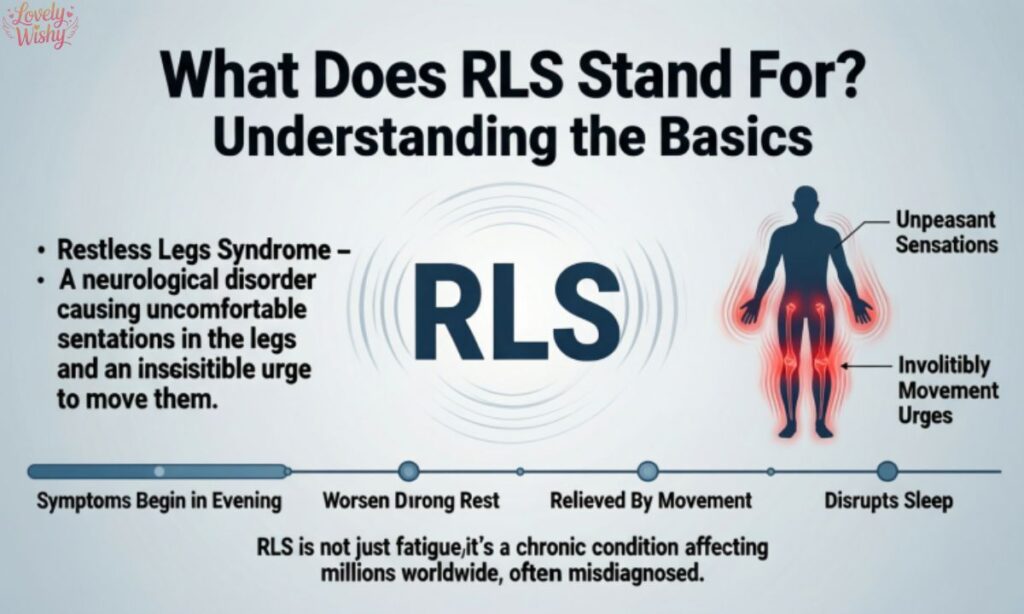
RLS is an acronym that can mean different things depending on the context where you encounter it. The most common interpretations include “Restless Leg Syndrome” in medical contexts and “Really Loud Sigh” in casual texting. However, context is everything when decoding acronyms, and the meaning can shift based on who’s texting you and what you’re discussing.
The versatility of RLS makes it a perfect example of how modern communication has evolved. Unlike traditional language, internet slang adapts quickly, and acronyms serve as shorthand for expressions, emotions, and even medical conditions. Understanding which version of RLS someone means requires paying attention to the broader conversation and the relationship you have with that person.
The Origin of RLS as Internet Slang
The journey of RLS from a purely medical term to internet slang is fascinating. “Restless Leg Syndrome” has been a recognized medical condition for decades, but as texting and online communication exploded in the 2000s, people began creating humorous interpretations of existing acronyms.
The casual “Really Loud Sigh” interpretation likely emerged from the need to express frustration, exasperation, or dramatic reactions through text. Before emojis became universal, people relied heavily on text-based expressions and acronyms to convey emotion. The RLS acronym fit perfectly into this need—it’s quick to type, universally understood by those in the know, and adds a touch of humor to what might otherwise be a bland message.
What’s interesting is that RLS hasn’t seen the same level of mainstream adoption as other acronyms like “LOL” or “SMH.” This could be because it’s less intuitive without explanation, or because people prefer visual communication methods like emojis nowadays. Still, it persists in certain online communities and among specific age groups.
RLS Medical Meaning: Restless Leg Syndrome Explained
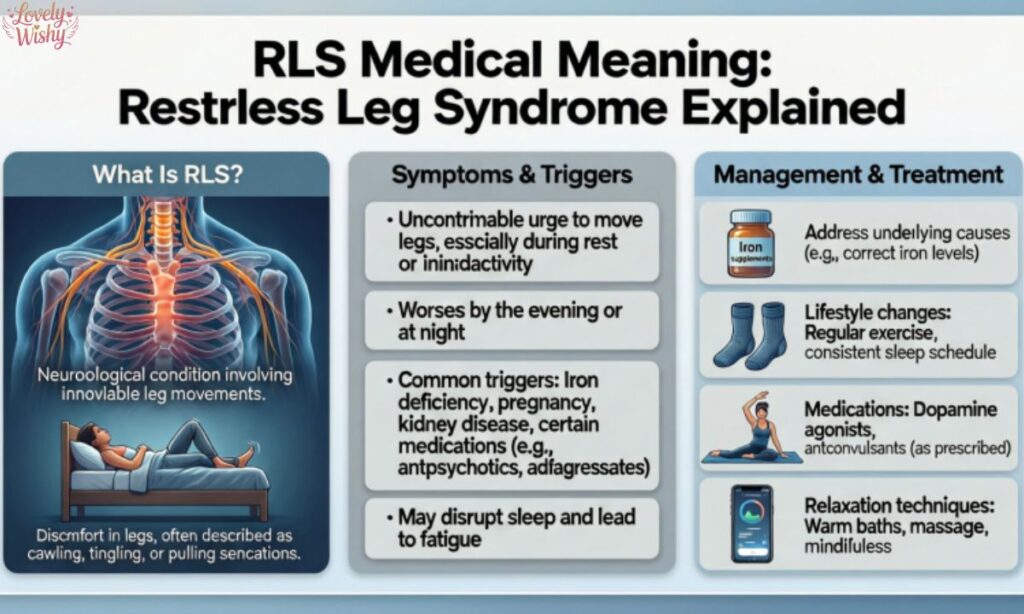
Let’s dive into the medical interpretation, which is actually the more serious and clinical use of RLS. Restless Leg Syndrome, medically abbreviated as RLS, is a neurological condition that affects millions of people worldwide.
What Is Restless Leg Syndrome?
Restless Leg Syndrome is characterized by uncomfortable sensations in the legs, usually described as tingling, burning, or crawling feelings, combined with an irresistible urge to move them. These sensations typically occur when a person is sitting or lying down, especially in the evening or at night.
The condition can range from mildly annoying to severely disruptive, affecting sleep quality and overall well-being. People with RLS often find relief by moving their legs, walking, or stretching, though the sensations return once they become stationary again.
Common Symptoms and Triggers
| Symptom/Trigger | Description |
| Uncomfortable sensations | Tingling, burning, crawling, or aching in legs |
| Timing | Usually worse in evenings and nighttime |
| Relief method | Movement, stretching, or walking |
| Duration | Can last from minutes to hours |
| Sleep disruption | Often interferes with falling asleep or staying asleep |
| Common triggers | Caffeine, stress, prolonged inactivity, iron deficiency |
Why Understanding Medical RLS Matters in Texting
You might encounter “RLS” in text when someone is discussing health concerns, sharing personal struggles, or talking to healthcare professionals. For example: “I’ve been dealing with RLS at night, making it impossible to sleep” or “My doctor thinks I might have RLS because of my symptoms.
RLS in Casual Texting: Really Loud Sigh
Now let’s shift to the more lighthearted interpretation that’s become popular in texting and online chats. When someone texts you RLS, they might be expressing a dramatic, exasperated sigh, the kind of reaction you’d make when something is frustrating, disappointing, or just too much to handle.
When Do People Use RLS in Casual Texting
People typically use “RLS” when they want to communicate frustration without typing out an entire explanation. It’s efficient, expressive, and has a slightly humorous tone to it. Here are common scenarios:
Expressing frustration with a situation: My boss just gave me extra work right before the weekend, RLS
Reacting to disappointing news: “You’re canceling our plans. RLS
Showing exasperation about someone’s behavior: He never listens to me anymore. RLS
Responding to a bad day: “Everything went wrong today. RLS
The beauty of using RLS instead of saying “I’m so frustrated” is that it feels more casual, relatable, and sometimes funnier. It acknowledges the negativity without dwelling on it too much.
RLS in Gendered Texting Contexts: From Guys and Girls
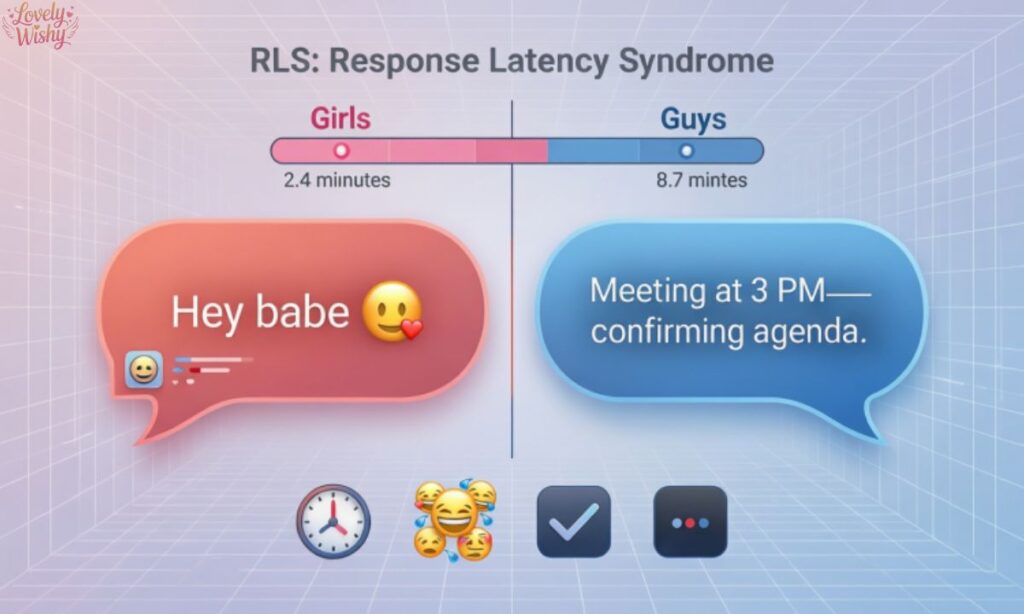
Does the meaning of RLS change depending on who’s texting you, a guy or a girl? Interestingly, the answer is both yes and no. The basic meaning remains the same, but the context and implications might differ slightly based on relationship dynamics.
When a Guy Texts You RLS
When a male friend, acquaintance, or romantic interest sends “RLS,” he’s likely expressing frustration about something. It could indicate:
- He’s having a bad day and needs venting space
- He’s frustrated with a situation and wants sympathy or support
- He’s reacting to news you’ve shared with him
- He’s making light of a serious situation with humor
In dating contexts, if a guy texts you RLS after you suggest something, it might mean he’s not thrilled about the plan but is expressing it in a joking way rather than being outright negative.
When a Girl Texts You RLS
Similarly, when a girl texts you RLS, she’s using it to express exasperation or frustration. The context clues matter:
- She might be venting about stress or drama
- She could be reacting dramatically to something you said (often in a playful way)
- She might be expressing genuine frustration about a situation
- She could be showing solidarity if you’ve shared something frustrating
In friendships, girls often use RLS as a bonding tool, sharing in mutual frustration creates connection and understanding.
The Gender-Neutral Truth
Here’s the important bit: RLS isn’t inherently gendered. Both guys and girls use it the same way, and the meaning doesn’t shift based on gender. What matters more is the relationship you have with the person and the overall tone of your conversation. Some people use it frequently, while others rarely use it at all, this is more about personal communication style than gender.
RLS on Social Media: TikTok, Instagram, Twitter, and Beyond
Social media platforms have their own dialects and communication styles, and RLS finds different levels of adoption across these spaces.
TikTok and RLS
On TikTok, RLS might appear in comments when people are reacting dramatically to content. A video of someone failing at something funny might get comments like “RLS fr 😭” (really loud sigh for real). It’s part of the platform’s culture of exaggerated reactions and comedic responses.
Instagram and Text Comments
Instagram users might deploy RLS in caption comments, direct messages, or stories. It’s less formal than traditional social media communication but more mainstream than niche internet slang.
Twitter/X Usage
On Twitter, RLS occasionally appears in tweet responses or in threads where people are discussing frustrations. However, Twitter users tend to prefer more direct language or established abbreviations like SMH (Shaking My Head) or FML (you know this one).
Reddit Communities
Certain Reddit communities embrace RLS more heavily, particularly those discussing lifestyle, relationships, or venting. In these spaces, RLS serves as a quick way to join in with shared frustration or commiserate with others.
Real-Life Examples: How RLS Works in Different Conversations
Let’s look at some realistic examples to see how RLS functions in actual messaging:
Example 1: Work Frustration
- Friend: “My manager just scheduled a meeting for Friday at 4 PM
- You: “RLS… that’s literally the worst time”
Example 2: Dating Drama
- Friend: “He left me on read for three days
- You: “RLS that’s so annoying
Example 3: Health Discussion
- Mom: “The doctor thinks I might have RLS because I can’t sleep at night
- You: “Have you asked about treatment options?
Example 4: Shared Misery
- Coworker: “This project is taking forever
- You: “RLS I know exactly what you mean
Example 5: Joking Around
- Friend: “I burnt my toast again
- You: “RLS the struggle is real 😅
Frequently Asked Questions About RLS in Text
Is RLS Still Used in Modern Texting
Yes, though it’s not as universal as LOL or OMG. It remains popular in certain communities and age groups, particularly among those who grew up texting heavily in the 2000s and 2010s. Newer acronyms and emojis have taken some of its space, but RLS persists.
Can I Use RLS in Professional Communication
Not really. Stick to traditional language or at least more widely recognized acronyms in professional settings. Using RLS in a work email or message to your boss would likely cause confusion or seem unprofessional.
What If Someone Uses RLS and I Don’t Understand
Simply ask! “What does RLS mean?” is a perfectly reasonable question. Most people will explain without judgment, and you’ll learn something new about how that person communicates.
Are There Other Meanings of RLS I Should Know
While “Restless Leg Syndrome” and “Really Loud Sigh” are by far the most common meanings, some people might use RLS creatively or use it as an acronym within specific online communities. Context is your best tool for figuring out what someone means.
Does RLS Change Meaning Across Different Age Groups
Generally, no. The meaning stays consistent, but usage patterns vary. Older generations and younger Gen Z users might use it differently or not at all. Millennials and older Gen Z seem to use it most frequently.
Conclusion
Understanding RLS meaning in text is just one small piece of the broader puzzle of modern digital communication. Whether it’s the medical condition Restless Leg Syndrome or the casual expression Really Loud Sigh, RLS demonstrates how language evolves in the digital age.
The key takeaway is that context matters. Pay attention to what’s being discussed, who’s messaging you, and the overall tone of the conversation. These factors will help you decipher whether RLS is a serious health reference or a lighthearted expression of frustration.
As online communication continues to evolve, acronyms like RLS remind us that humans are creative and efficient communicators. We develop shortcuts, add personality to text, and build shared understanding within our communities. While RLS might not be as essential as knowing LOL from SMH, having it in your vocabulary makes you a more fluent participant in modern text conversations.
The internet’s slang dictionary is constantly growing, and now you’re equipped to understand one more piece of it. Whether you’re texting a friend, discussing health concerns, or scrolling through social media, you’ll recognize RLS and know exactly what it means. Happy texting.

LovelyWishy is a warm space filled with meaningful wishes, heartfelt messages, and thoughtful responses. We create simple, beautiful words that help you express emotions, celebrate moments, and connect with the people you love in a special and memorable way.