

If you’ve received an “XD” in a text message, social media comment, or online gaming chat, you might have wondered what it means. This three-character emoticon has become one of the most common expressions in digital communication, bridging the gap between typed conversations and facial expressions.
Understanding what XD means, where it came from, and how to respond appropriately can help you communicate more naturally in online spaces. In this guide, we’ll explore the complete evolution of this internet staple and teach you how to use it effectively in different contexts.
What Does XD Really Mean in Text?
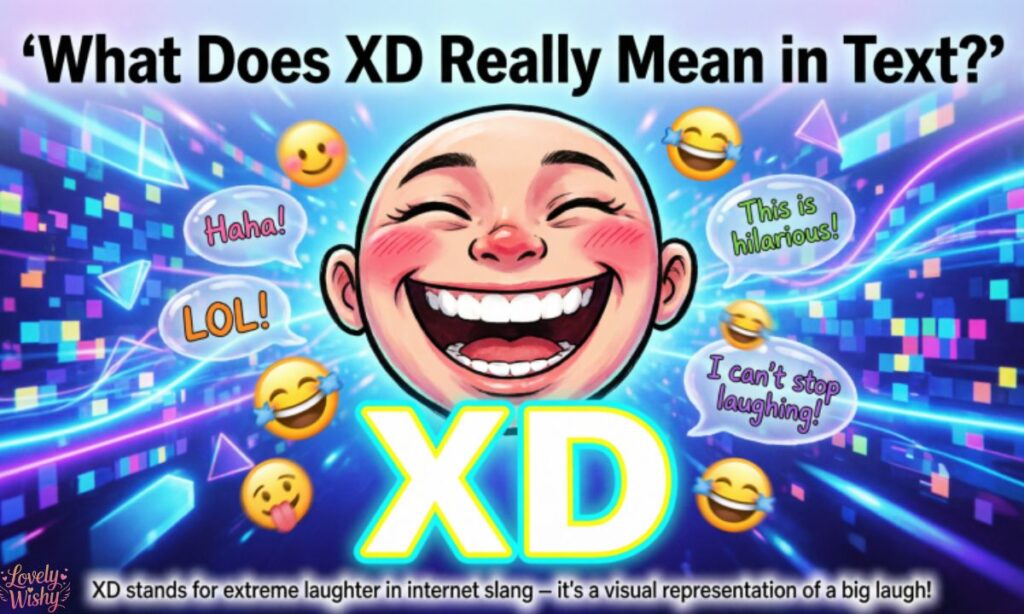
XD is a text-based emoticon that represents a face laughing with closed, squinting eyes. The “X” represents tightly closed eyes from laughing, while the “D” represents an open, grinning mouth. When you tilt your head slightly to the left, you can visualize the expression: a person experiencing genuine, unrestrained laughter.
The meaning is straightforward: XD conveys laughter, amusement, or extreme happiness in text form. It’s more expressive than a simple “haha” because it suggests authentic, intense laughter rather than mild amusement. When someone sends you XD, they’re not just chuckling, they’re genuinely entertained.
Origins and Evolution of “XD”
The exact origin of XD is difficult to pinpoint, but its roots trace back to the early days of the internet when ASCII emoticons dominated online communication. Unlike modern emojis that use standardized graphics, ASCII emoticons like XD were created using keyboard characters and required interpretation from the reader.
XD gained significant traction during the late 1990s and early 2000s on forums, instant messaging platforms (like AIM and MSN Messenger), and early social media. During this era, before emoji became standard, keyboard emoticons were the primary way people expressed emotions in text. XD stood out because it was more expressive and visually intuitive than alternatives like 😀 or :P.
The emoticon’s popularity skyrocketed with the rise of gaming communities, anime forums, and fan communities where XD became a signature expression of excitement and shared joy. As internet culture evolved, XD transitioned from niche internet slang to mainstream digital communication, though it remains particularly prevalent among younger users, gamers, and online communities.
How XD Is Used Today
In modern digital communication, XD serves multiple purposes depending on context and tone. Understanding these variations helps you interpret the message accurately and respond appropriately.
Primary Uses of XD
Genuine Laughter or Amusement: The most common use is expressing that something made you laugh. If a friend shares a funny meme and responds with XD, they find it genuinely hilarious.
Expressing Joy or Excitement: Beyond just laughter, XD can indicate pure happiness or enthusiasm about something. I just got tickets to the concert! XD shows excitement that transcends simple amusement.
Self-Deprecating Humor: People often use XD when making jokes about themselves, softening potentially negative comments with humor and lightheartedness.
Sarcasm and Irony: In digital communication where tone can be unclear, XD sometimes accompanies sarcastic remarks to ensure the reader understands the joking intent.
XD Meaning from a Guy vs. a Girl
A common question people ask is whether XD means something different depending on who sends it. The short answer: not really. XD is gender-neutral and carries the same meaning regardless of the sender’s gender.
However, communication patterns and frequency may differ slightly:
- Some guys might use XD more sparingly, relying instead on “haha” or other expressions
- Some girls might incorporate XD more frequently in casual texting
- Gaming communities show no gender difference in XD usage
- Professional messaging is relatively rare for both genders to use XD
These patterns reflect individual communication styles rather than inherent gender differences. The emoticon itself means the same thing: laughter and amusement.
Real-World Examples of XD in Context
Example 1 – Casual Texting Friend: I walked into the glass door today You: “XD that’s hilarious, are you okay.
Example 2 – Online Gaming Player 1: “Did you see that epic fail?” Player 2, XD I couldn’t stop laughing.
Example 3 – Social Media Comment Post, My cat just knocked over an entire shelf. Comment: XD this is the funniest thing I’ve seen all week
Example 4 – Fan Community Discussion User 1The plot twist completely blindsided me User 2: Right?? XD I literally gasped
Example 5 – Group Chat Group Member, Remember when he said he could parallel park. Response, XD never let him live that down
Common Misunderstandings About XD
Several misconceptions surround the use and meaning of XD. Let’s clarify the most frequent ones:
Misconception 1: XD is Outdated or Childish
While it’s true that XD peaked in popularity during the early 2000s, it remains widely used across all age groups in informal digital communication. Dismissing it as childish overlooks its continued presence in gaming communities, meme culture, and casual texting among adults.
Misconception 2: XD Always Indicates Mockery
Some people worry that XD directed at them suggests the sender is laughing at them negatively. In context-dependent situations, this can happen, but the vast majority of XD usage expresses positive amusement, not cruel mockery.
Misconception 3: XD Has Hidden Meanings
Occasionally, people speculate that XD has secret meanings in specific communities. While certain communities might develop inside jokes, XD universally represents laughter across all platforms.
Misconception 4: XD Is Inappropriate in Professional Settings
While reserve in formal workplace communication is wise, brief mentions like “XD” in casual team chats among colleagues is generally acceptable, depending on workplace culture.
Similar and Related Expressions
Several emoticons and expressions serve similar purposes to XD. Understanding these alternatives helps you recognize variations in digital communication:
| Expression | Meaning | Tone | Usage Frequency |
| XD | Loud, genuine laughter | Very positive | Very common |
| 😀 | Big smile/happiness | Positive but milder | Common |
| 🙂 | Simple contentment | Neutral positive | Very common |
| HAHA | Laughing (text form) | Positive | Very common |
| LOL | Laughing out loud | Varies widely | Extremely common |
| ROFL | Rolling on floor laughing | Very positive | Moderately common |
| 😉 | Winking (joking) | Playful | Common |
| XP | Tongue out playfully | Playful | Less common |
| =D | Big grin | Positive | Less common |
How to Respond When Someone Sends XD
Knowing how to respond to XD depends on the context and your relationship with the sender. Here are effective approaches:
If They’re Laughing at Your Joke: Respond with your own XD, a laughing emoji, or “glad you found it funny!” This acknowledges shared humor and continues the positive interaction.
If They’re Expressing Excitement: Mirror their enthusiasm with “That’s awesome! XD” or use enthusiastic language that matches their energy level.
If It’s in a Group Chat: A simple reaction emoji or brief comment that adds to the conversation works well. You don’t need to directly respond to every XD in a group setting.
If You’re Unsure of the Tone: Read the full context of the conversation. The message before XD will clarify whether it’s genuine laughter, sarcasm, or something else.
Professional Context: In workplace chats, you can respond casually if the tone is established as informal, but slightly more formal responses might be appropriate to maintain professionalism.
XD in Different Digital Spaces
Gaming Communities
XD is especially prevalent in gaming. Whether in Roblox chat, Discord servers, or in-game messaging, XD represents genuine reactions to funny moments, clutch plays, or absurd situations.
Online Forums and Reddit
Across Reddit communities and niche forums, XD remains a popular expression in casual discussions, particularly in communities focused on entertainment, gaming, or humor.
Social Media Platforms
On Instagram, TikTok, and Twitter, XD appears frequently in comments, captions, and direct messages, particularly among younger users aged 13-30.
Dating Apps and Texting
On platforms like Tinder, Bumble, and in early-stage romantic texting, XD helps create a playful, lighthearted tone without seeming overly formal.
Workplace Communication
In casual workplace messaging platforms like Slack or Teams, XD can appear in informal chats but is generally less common than in personal contexts.
Cultural and Regional Variations
While XD is understood globally, certain cultures and regions show different adoption rates and preferences:
Asian Online Communities: XD enjoys particularly high usage in East Asian internet culture, anime fandom spaces, and gaming communities in countries like Japan, South Korea, and China.
North American Usage: Common among younger generations but more varied among older demographics who might prefer emoji or other expressions.
European Communities: Similar to North American patterns, with stronger presence in gaming and international online communities.
Gaming Globally: Transcends regional differences, gamers worldwide use XD consistently across platforms and languages.
The emoticon’s universality means it’s understood across language barriers, making it valuable in international online spaces.
XD in Roblox and Gaming Platforms
For those asking “what does XD mean in Roblox, it carries the same meaning as elsewhere. In Roblox’s chat system, players use XD to express laughter during gameplay or in-game interactions. The Roblox community, skewing younger, incorporates XD frequently in casual player conversations.
Similar usage appears across gaming platforms: Minecraft servers, Discord gaming channels, competitive esports chats, and MMORPGs. The shared nature of gaming, where funny moments happen regularly, makes XD especially useful.
Interesting Facts About XD
- Pre-Emoji Era Icon: XD represents one of the last widely-used ASCII emoticons that survived the emoji transition
- Cross-Platform Consistency: Unlike some emoticons that render differently across platforms, XD’s keyboard nature ensures identical appearance everywhere
- Generational Marker: Linguists note that XD usage frequency can indicate a person’s primary internet formation period
- International Bridge: XD transcends language barriers more effectively than text-based expressions
- Gaming Staple: Professional esports teams and streamers regularly use XD in public communications
When NOT to Use XD
While XD is generally safe in informal contexts, certain situations warrant avoiding it:
- Formal business emails or professional documentation
- Academic writing or formal research communication
- Customer service responses (unless company culture explicitly allows it)
- Serious or sensitive conversations about personal issues
- Communication with authority figures or those unfamiliar with internet slang
- Situations where tone might be misinterpreted (stick to clear language instead)
Frequently Asked Questions
Is XD considered rude
XD is positive and friendly. It only becomes problematic if used mockingly in a situation where the other person is upset or hurt, which would depend on context rather than the emoticon itself.
Can I use XD in professional emails
Generally, avoid XD in formal professional communication. Save it for casual team chats where colleagues use similar informal expressions.
Does XD mean something different in different countries
No, XD maintains consistent meaning across cultures and regions, it universally represents laughter and amusement.
Why do people still use XD when emojis exist
XD is quicker to type on some devices, carries nostalgic value for long-time internet users, and works in text-only environments. Many people also simply prefer its aesthetic or habitual usage.
Is XD only used by young people
While more common among younger demographics, XD is used across age groups in casual online communication, particularly in gaming and hobby communities.
What if someone uses XD sarcastically
Sarcastic XD is rare but possible in established relationships where sarcasm is the communication norm. Context and tone of the overall conversation clarify intent.
How is XD different from lol
LOL (laughing out loud) is more generic and common, while XD suggests more intense, unrestrained laughter. XD feels more expressive and personal.
Conclusion
XD remains a vital part of digital communication culture, bridging the gap between text-based conversation and emotional expression. From its roots in early internet forums to its modern presence across gaming platforms, social media, and casual texting, XD has proven remarkably durable.
Understanding what XD means, and how to use it appropriately, enhances your digital communication skills. Whether you’re texting friends, participating in online communities, or gaming with teammates, XD serves as a universal signal of genuine laughter and positive emotion. The emoticon’s simplicity and clarity make it valuable in an increasingly connected world where conveying tone through text remains challenging.
As digital communication continues evolving, XD stands as a testament to how simple keyboard characters can create shared meaning and build connections across the internet. Next time you see XD in your messages, you’ll know exactly what your friend is expressing, and you might just feel like responding with an enthusiastic XD of your own.

LovelyWishy is a warm space filled with meaningful wishes, heartfelt messages, and thoughtful responses. We create simple, beautiful words that help you express emotions, celebrate moments, and connect with the people you love in a special and memorable way.