
So you’re scrolling through your messages, someone drops “DTF?” and your brain just. stops. You’ve seen it before, maybe in a meme, maybe in a TikTok comment, maybe in a direct message that caught you completely off guard. And now you’re here, Googling it at 11pm wondering if you’re the only one who didn’t know.
DTF is one of those internet slang terms that floats around everywhere dating apps, group chats, Reddit threads, casual texts but rarely gets explained properly. People either assume everyone knows it, or they use it so loosely that its meaning gets genuinely murky. This article is going to break it all down. What DTF means, where it came from, how it’s evolved, and honestly when you should think twice before using it.
What Does DTF Mean in Text?
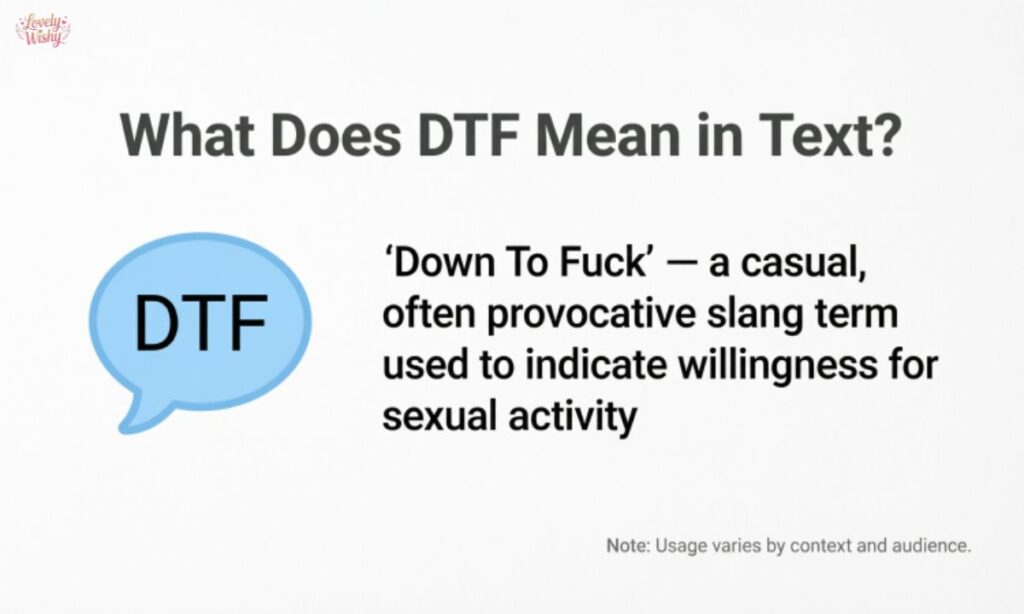
DTF stands for “Down To F*** It’s a blunt, direct expression used to signal that someone is open to casual sexual activity. No commitment implied. No strings attached. Just physical availability, communicated in three letters.
In the world of online dating slang and text message shorthand, it gets thrown around pretty casually. Someone might say “Are you DTF tonight?” or drop a simple DTF and the message is crystal clear, they’re asking if you’re open to a hookup.
The PG-13 Versions People Use
Now, because the internet loves to repurpose everything, DTF has also been adopted in softer, joking contexts. You might see things like:
- “DTF for tacos 🌮 obviously not sexual, just asking if you’re down to eat
- “DTF for a movie marathon friend zone, completely harmless
- “DTF for Fortnite later gaming slang, Gen Z humor
These variations exist mostly as jokes or memes. The humor comes from using a loaded acronym in a completely mundane sentence. But here’s the thing, the original meaning is always lurking underneath, so context really does everything here.
Other Technical Meanings of DTF
Outside of slang, DTF shows up in a few professional and industry-specific settings:
- Direct-to-Film (DTF printing): A textile printing method that transfers designs onto fabric using a special film. Huge in the custom merch world right now.
- Down to Fight: Used in gaming communities to say you’re ready for a battle or PvP match.
- Down the Field: Sports commentary shorthand.
- Drug Task Force: Law enforcement context.
If someone in a work Slack says we’re going DTF printing for the next batch, don’t panic. They’re talking about shirts.
Where Did DTF Come From? The Origin Story
The acronym didn’t just appear one day out of nowhere. Its roots go back to early 2000s American party and dating culture, where casual hookup phrases were already floating around in nightlife spaces.
But the real explosion? That happened because of reality TV.
MTV’s Jersey Shore which premiered in 2009, brought DTF into mainstream households whether they wanted it or not. Cast members, particularly Pauly D and others, used the phrase repeatedly and openly. For better or worse, the show normalized the term and burned it into pop culture. Suddenly teenagers, college students, and curious parents everywhere were looking it up.
From there, it migrated naturally into texting as smartphones became universal, then onto Twitter and Tumblr, and eventually became a staple of internet slang across every major platform.
Green’s Dictionary of Slang traces the written use back to around 2002, but the cultural moment was definitely Jersey Shore. That’s when it went from underground hookup culture jargon to something your aunt might accidentally put in a work email.
How DTF Is Used Across Different Platforms
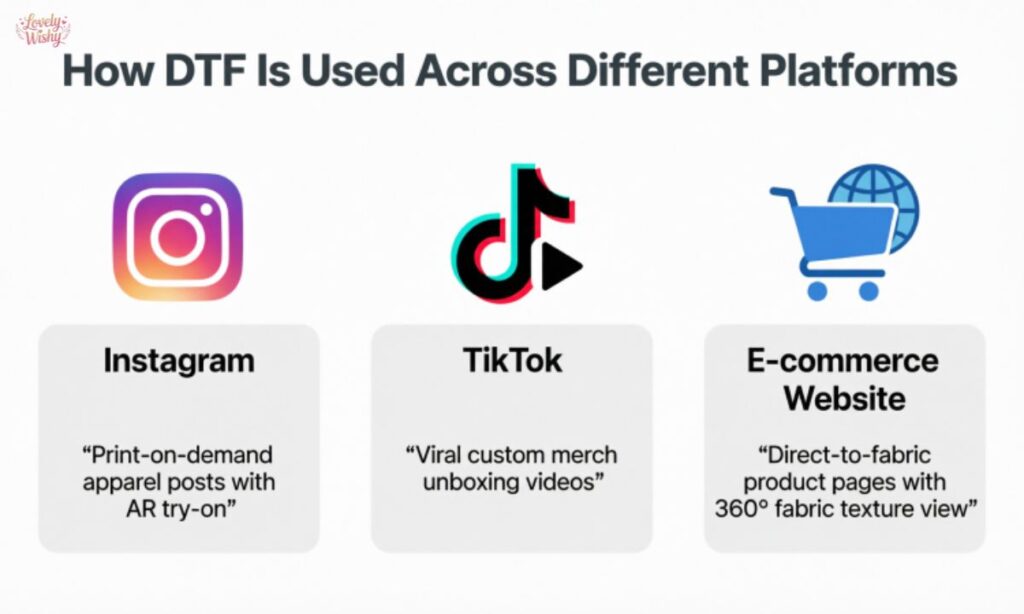
In Text Messages and DMs
This is the most common setting. Usually late at night, usually from someone you’ve been talking to on a dating app or someone you already know. It’s direct. It removes ambiguity. Whether that directness is refreshing or jarring really depends on the relationship and the person.
Used between close friends it can also be a joke, are you DTF for this road trip next weekend?” is pretty clearly about a road trip. But in flirty conversation? The meaning snaps back to the original almost every time.
On Dating Apps (Tinder, Bumble, Hinge)
On apps like Tinder, DTF used to be practically a profile staple in the early 2010s. People would write “not here for anything serious, just DTF” right in their bios. Over time, the apps themselves started filtering or discouraging explicit language, so it moved to the message phase instead.
Today it’s more implicit, people signal it through conversation rather than leading with it, but it still pops up, especially in opening messages.
TikTok and Memes
TikTok gave DTF a whole new comedic life. The format is almost always the same: take a completely normal situation and use DTF ironically. “POV: Your dog asking if you’re DTF (Down to Fetch)” has millions of views as a format.
The humor works specifically because everyone knows the real meaning. Without that knowledge, the joke doesn’t land. So in a weird way, TikTok has made DTF mainstream knowledge while simultaneously making it less aggressive, it’s become a punchline as much as a proposition.
On Snapchat and Instagram DMs
Because Snapchat messages disappear, people feel bolder. The platform’s ephemeral nature makes users more comfortable sending things they’d never put in a regular text. DTF shows up here with less irony and more sincerity than it does on TikTok.
Instagram DMs are similar, the semi-private nature of sliding into someone’s DMs already carries a certain energy, and DTF fits that context.
Pros and Cons of Using DTF in Your Texts
Okay, let’s be real about this.
The Case For It
- Clarity. There’s no ambiguity. You’re not playing games or hinting at something. Some people genuinely appreciate that directness.
- Efficiency. In casual dating situations between adults who are on the same page, it cuts to the point fast.
- Established shared language. Within certain communities, especially college-age adults, hookup app users, or people who’ve built rapport, it functions as mutually understood shorthand.
The Case Against It
- Easy to misread. If the other person doesn’t know you well enough to gauge your intent, it can feel threatening or disrespectful, even if you meant it lightly.
- No room for nuance. Three letters flatten the entire complexity of attraction, interest, and consent into a binary question. That’s… a lot to ask of an acronym.
- Context collapse is a real risk. A message you sent to someone flirty can end up screenshotted, forwarded, or seen by the wrong person. DTF doesn’t age well out of context.
- It can come across as dehumanizing. Particularly if it’s an opening message to someone you’ve barely spoken to, it signals you’re interested in one thing and one thing only, which not everyone finds flattering.
The bottom line? Know your audience. What reads as cheeky between two people with established chemistry can read as offensive coming from a stranger.
How to Respond If Someone Sends You DTF
This comes up more than you’d think, and it’s okay to not be sure how to handle it.
Here are a few approaches depending on how you feel:
If you’re interested: A simple “yes” or a flirty reply works fine. You don’t have to mirror the bluntness unless that’s your style.
If you’re not interested: You don’t owe anyone an explanation. “No thanks” is a complete sentence. Or just don’t respond — silence is an answer too.
If you’re unsure or surprised: “What made you send that?” is a totally reasonable response. It opens conversation without committing to anything.
If it made you uncomfortable: You’re completely valid in saying so. “That felt out of nowhere and I’m not comfortable with it” is clear and honest. Anyone worth your time will respect that.
DTF and the Bigger Picture of Modern Hookup Culture
It would be a little shallow to talk about DTF only as a vocabulary lesson without acknowledging what it represents. The acronym is basically a shorthand for the broader cultural shift toward casual, low-commitment intimacy, a shift that apps, texting, and the anonymity of online communication accelerated dramatically.
For some people, that culture is liberating. For others, it’s alienating. Most people land somewhere complicated in between.
What’s worth noting is that down to phrasing has become a whole linguistic pattern on its own down to hang,down to chill,down to vibe. These softer alternatives carry less sexual charge but the same structural energy: are you available and willing, yes or no? It’s hookup culture’s grammar, basically.
DTF sits at the explicit end of that spectrum, which is why it still carries weight even after 20+ years of existence.
Is DTF Appropriate for Teens to Use?
Short answer: no, and not because the acronym itself is magical or harmful on its own.The issue is context and maturity. Teenagers, especially younger ones, often encounter DTF in memes and use it without fully processing what they’re signaling to others. A 14-year-old throwing “DTF?” in a group chat might think they’re being funny. The person receiving it, depending on their age or situation, might not read it that way at all.
Parents who spot DTF in their kid’s messages aren’t overreacting by bringing it up. It’s a decent opening to a conversation about respect, consent, and what casual language can communicate without the sender realizing it. Not a lecture, just a talk.
Practical Tips for Navigating DTF in Your Digital Life
- Read the room before using it. Established rapport, mutual flirty energy, same general understanding of what you’re looking for, those are the conditions where it works.
- Don’t use it as an opener. On a dating app or in someone’s DMs, leading with DTF tells the other person very little about you and a lot about what you want. It rarely lands well.
- When in doubt, say what you mean in actual words. “I’m not looking for anything serious, are you?” gets the same information across without the abbreviation baggage.
- Check what platform you’re on. Professional Slack? Obviously not. Close friends group chat? Context-dependent. Tinder match you’ve been chatting with for a week? Still proceed with care.
- Know the non-sexual meanings. If you work in textile printing or you’re gaming, be aware that “DTF” from you might land differently than you intend if your audience knows the slang version.
Frequently Asked Questions
Does DTF mean the same thing for everyone
Mostly yes, the core meaning of “Down To F***” is widely understood across demographics and regions. The ironic/humorous use is secondary and always depends on context.
Is DTF only used by younger people
It originated in younger culture and is most common in the 18–35 range, but it’s widely understood across generations now. Parents, teachers, and employers know what it means, that ship sailed with Jersey Shore.
Can DTF ever be innocent
In the meme/jokey sense, yes. “DTF (Down to Film)” as a photography joke is innocent. DTF for brunch?” between friends is harmless. But those are deliberate word games, the baseline meaning is never fully gone.
What are some alternatives to DTF
Depending on what you’re trying to say: Are you free tonight ,Want to hang, FWB, “casual situation?”, or just being direct in plain language. Sometimes spelling it out actually works better than an acronym.
Is DTF offensive
It depends entirely on who you ask and how it’s used. Between consenting adults who are already on the same page, it’s just shorthand. Sent to someone out of the blue, it can absolutely come across as disrespectful. Offense isn’t in the letters — it’s in the delivery.
How old is the term DTF
The earliest documented uses date to around 2002 in online dating forums and urban slang. It became mainstream culture around 2009–2010 thanks to Jersey Shore.
Final Thoughts
DTF isn’t a complicated term, three letters, one meaning, more or less. What IS complicated is everything around it: the timing, the tone, the platform, the relationship, the age of the people involved, and the cultural context that makes three letters land as a joke in one situation and a red flag in another.Understanding DTF meaning in text is useful not just for decoding messages but for understanding how modern digital communication works more broadly.
Slang like this is a window into how people negotiate desire, availability, and connection, often in spaces that feel anonymous and low-stakes, but rarely are.If someone sends it to you, now you know what they mean. If you’re thinking about sending it to someone, now you have the full picture to make that call wisely.And if you’re a parent who stumbled here because you found it in your kid’s phone? You now have everything you need to start that conversation.

LovelyWishy is a warm space filled with meaningful wishes, heartfelt messages, and thoughtful responses. We create simple, beautiful words that help you express emotions, celebrate moments, and connect with the people you love in a special and memorable way.