

You’ve probably seen it pop up in a text message, heard it in a TikTok video, or maybe someone slipped it into a conversation and you nodded along pretending you totally knew what it meant. Don’t worry, you’re not alone. “Pookie” has quietly become one of those words that’s everywhere, and yet a lot of people still aren’t entirely sure what it means or where it came from.
So let’s settle this once and for all.
Whether you’re trying to understand what your partner is calling you, why your Gen Z coworker just referred to their cat as my little pookie, or why a rapper dropped the word in a song, this guide breaks it all down. The meaning, the origin, the contexts, the nuances. All of it.
What Does “Pookie” Actually Mean?
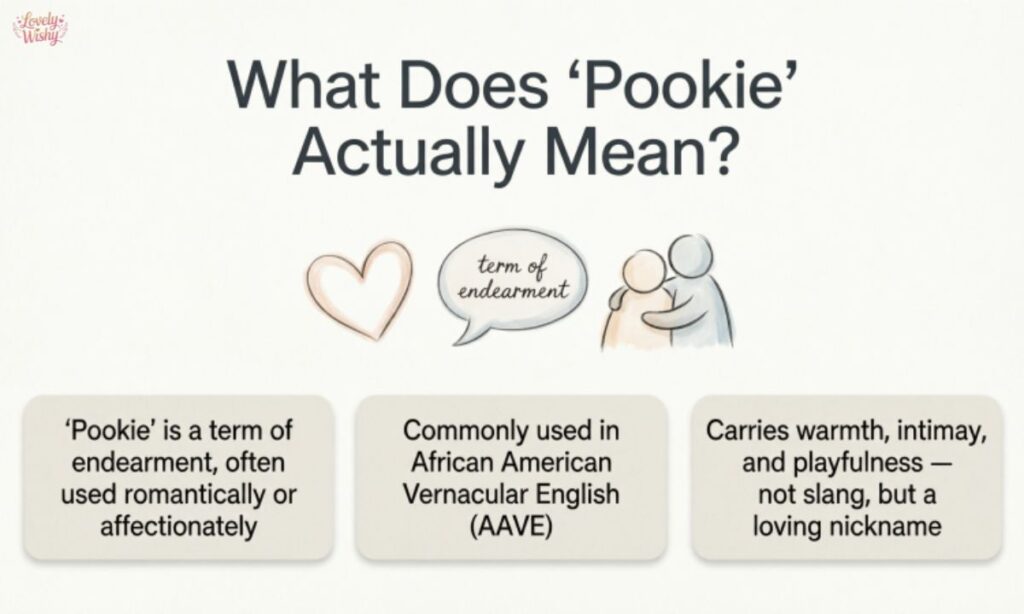
At its most basic level, pookie is a term of endearment. It’s one of those soft, warm, almost silly-sounding words people use when they’re feeling affectionate. Think honey, babe, sweetpea pookie lives in that same emotional neighborhood.
But here’s where it gets interesting: unlike honey or darling, pookie carries a kind of playfulness that the older pet names don’t. It’s bouncy. A little goofy. Calling someone pookie isn’t just saying I love you it’s saying I love you and also I think you’re cute and a little ridiculous and I mean that in the best possible way.
That’s the magic of it, really.
In everyday usage, you’ll hear pookie used for:
- Romantic partners probably the most common context
- Children especially babies and toddlers
- Pets particularly small, fluffy, or cuddly animals
- Close friends in a teasing, affectionate way
- Fictional characters where the name itself signals warmth or innocence
The word doesn’t have a single rigid meaning, which is honestly part of why it’s stuck around so long. It bends to fit whatever relationship you’re in.
The Origin and History of Pookie — Where Did It Come From?
Okay, here’s where things get a little fuzzy, because pookie doesn’t have one clean origin story. It’s more like several threads that converged over decades.
Pookie in Early American Slang
The word pookie (sometimes spelled “pooky”) appears in informal American speech going back several decades. Linguists and slang historians generally trace it to Southern and African American vernacular English, where terms of endearment have always been colorful, inventive, and deeply personal. Words like “boo,” “bae,” and yes, “pookie,” often started in those cultural spaces before spreading into the wider mainstream.
It’s worth noting that pookie was never a formal dictionary word, it emerged organically, the way most beloved slang does. One family uses it, then a neighborhood, then a region. By the time anyone thinks to write it down, it’s already everywhere.
Garfield’s Teddy Bear — The Pop Culture Boost
If you grew up reading Garfield comics, you already know Pookie. It’s the beloved teddy bear that the famously sarcastic, lasagna-obsessed cat carries around with genuine tenderness. Jim Davis gave Garfield this soft, vulnerable attachment, and in doing so, planted the word “pookie” firmly in the cultural memory of several generations.
That association matters. Garfield’s Pookie wasn’t ironic. It was sincere. And it gave the word a fuzzy, childhood-warmth quality that it’s never really lost.
New Jack City and the Street Context
Then there’s the other end of the spectrum. In the 1991 crime drama New Jack City, Chris Rock played a character named Pookie, a young man caught in addiction, trying to find his way out. The role was raw, sympathetic, memorable. It showed that pookie wasn’t just a cute nickname; it could be a real name, attached to a real (fictional) person with real depth.
That dual nature, sweet cartoon bear AND flawed, human character, says a lot about why the word has endured.
TikTok and the Modern Revival
Fast-forward to the mid-2020s and pookie is having a full-on renaissance. TikTok, in particular, supercharged the word. Videos of couples calling each other pookie went viral. Pet owners started narrating their animals’ thoughts in pookie-voice. The word got wrapped up in the broader trend of using baby talk and hyper-affectionate language as a form of humor and intimacy.
Gen Z didn’t invent pookie, but they definitely gave it new life.
What Does “Pookie” Mean in Different Contexts?
This is where you have to pay attention to how the word is being used. Context is everything with pookie.
Pookie in Romantic Relationships
In love, pookie is a pet name that signals deep familiarity. It’s not something you’d call someone on a first date, it emerges over time, when the relationship reaches a level where goofy nicknames feel natural rather than strange.
Good morning, pookie is warm. It’s private. It’s the kind of thing that would feel weird to say in front of colleagues but perfect whispered at the breakfast table.
Couples who use pookie tend to have a playful dynamic. It’s not a serious, formal term of affection, it’s for relationships where you can be a little silly together.
Pookie for Kids and Family
Parents, grandparents, aunts, uncles, anyone who has experienced the particular joy of a small child waddling toward them has probably been tempted to call that child something ridiculous and wonderful. Pookie fits perfectly in this space.
How’s my little pookie today?” A grandma might say this to a two-year-old. It’s gentle, warm, and carries none of the weight of more formal expressions of love. It just. flows.
Pookie for Pets
This might actually be pookie’s natural habitat. If you scroll through Instagram for ten minutes, you’ll find approximately ten thousand accounts where someone is referring to their cat or dog as “my pookie.” Chihuahuas named Pookie. Fluffy rabbits captioned “look at my little pookie. Cats who absolutely do not care but whose owners insist on the title anyway.
There’s something about the word that fits small animals especially well. The soft sounds, the syllables, it just works.
Pookie in Humor and Slang
Here’s the one that might surprise you: in certain informal contexts, pookie is used as a euphemism for flatulence. Yes, really. Among close friends or family members where that kind of humor is welcome, someone might say oops, I made a pookie and everyone laughs.
This usage is entirely situational, you’d never say it in most contexts, but it does exist, and it’s worth knowing if only to avoid confusion.
Pookie Online and in Gaming
Usernames, screen names, social handles, “Pookie,” “Pookie123,” “xXPookieXx”, the word translates well into the online world. It’s distinctive without being aggressive or hard to pronounce. It signals a certain personality: playful, approachable, a little whimsical.
Pookie in Pop Culture — More Examples You Might Recognize
Beyond Garfield and New Jack City, pookie has woven itself through popular culture in ways both obvious and subtle.
Tyler Perry’s Madea Series Pookie appears as a recurring character name across Perry’s plays and films, usually representing a relatable, everyday person from the community. It’s used with affection and a hint of humor.
Hip-Hop and R&B lyrics The word has appeared in numerous tracks as a term for a romantic partner or a close friend. Artists reach for it when they want something that sounds intimate and real rather than generic.
Reality TV Shows like The Real Housewives franchise have included the term casually, usually in confessionals or between cast members in affectionate moments. It adds warmth and relatability.
Children’s animation Animated characters named Pookie tend to be sidekicks, stuffed animals, or lovable creatures with soft personalities. The name communicates “this character is safe to love almost immediately.
TikTok trends, Entire TikTok niches have built themselves around pookie culture. Couple content, pet content, comedic content, the word is a kind of shorthand for a specific kind of softness and fun.
The Pros and Cons of Calling Someone “Pookie”
Look, nicknames are personal. What works in one relationship might feel strange in another. So let’s be real about this.
The Pros
It’s warm without being generic. “Baby” and “honey” are fine, but they’re so common they’ve lost a bit of their personal quality. Pookie still feels chosen, still feels specific.
It signals playfulness. Relationships where partners call each other pookie tend to be ones where humor and lightness are part of the bond. Using it is a small way of saying: we don’t take ourselves too seriously.
It’s versatile. Partners, kids, pets, friends, pookie travels across relationship types without losing its meaning.
It’s culturally resonant. Thanks to Garfield, Gen Z TikTok, and decades of casual use, pookie carries positive associations for most people who hear it.
Kids love it. If you’re a parent or grandparent, pookie is one of those words that gets a giggle out of children almost every time.
The Cons
It might not suit every relationship dynamic. If you’re in a more reserved or formal relationship, dropping “pookie” might land awkwardly. Some people find overly cute nicknames grating.
It can be infantilizing if overused. Like any pet name, pookie can feel condescending if used in the wrong tone or wrong moment, especially with adults who haven’t signed up for it.
The humor context can backfire. If someone doesn’t know the flatulence slang meaning and you use it that way, you might get a very confused look.
Not universally recognized. Depending on age, cultural background, and location, some people have never heard it. You might need to explain, which somewhat defeats the charm.
How to Respond When Someone Calls You “Pookie”
Getting called pookie for the first time can catch you off guard. Here’s how to navigate it depending on the situation.
If you love it: Lean in. Smile. Call them something equally ridiculous back. Thanks, pookie works perfectly. So does “I love that you call me that.
If you’re unsure: A simple warm response (“aww”) buys you time to decide if you want to adopt it or gently redirect.
If you’d prefer something else: Be direct but kind. That’s cute, I actually love when you call me [preferred nickname] though.” Most people will take the hint without drama.
If it’s from a stranger or coworker: A polite but firm redirect is fine. You don’t have to accept any nickname you’re not comfortable with.
If it’s being used humorously: Match the energy. Laugh. Lean into the joke. Pookie-humor works best when everyone’s in on it.
Alternative Nicknames With the Same Vibe as Pookie
If pookie isn’t quite right for your relationship but you love what it represents, that playful, warm, slightly-silly affection, here are some alternatives worth considering:
- Lovebug Playful and sweet, works for partners and kids alike
- Snugglebug Especially good for pets and children
- Boo Modern, casual, particularly common in romantic relationships
- Muffin Soft and warm, carries a similar texture to pookie
- Pudding British in origin, has a similar bouncy quality
- Peaches Sweet, quirky, memorable
- Cuddlebug Self-explanatory and hard to say without smiling
- Sugarplum More whimsical and poetic, good for someone who appreciates a little flair
- Pumpkin Classic, versatile, works across ages and relationships
- Button Small and cute, especially for tiny people or animals
None of these are better or worse than pookie, it comes down to what fits the specific energy of your relationship.
Practical Tips: Using “Pookie” Naturally in Your Life
If you want to start using pookie (or use it more confidently), here are some realistic, grounded tips:
Start in a low-stakes moment. The first time you call someone pookie, do it casually, in a text, in a moment of warmth, not as A Big Deal. Let it land naturally.
Read the room. Pookie works in playful, affectionate dynamics. If the vibe is serious or tense, save it for later.
Don’t overthink it. The whole point of pookie is that it’s spontaneous and warm. If you’re calculating whether to say it, you might be better off in the moment just saying what feels natural.
Use it consistently. Nicknames stick when they’re used regularly. If pookie becomes a habit, it stops feeling strange and starts feeling like a natural part of your relationship language.
Let it be mutual. If you call someone pookie and they love it, encourage them to give you a nickname too. The exchange of pet names is one of those small intimacies that builds connection over time.
For pets, commit. Pets respond to tone and repetition. If your dog becomes your pookie, use it every time you’re being affectionate. They’ll associate the word with warmth and love.
Is “Pookie” Slang, or Is It a Real Word?
This is a fair question. Pookie doesn’t appear in most formal dictionaries, but that doesn’t mean it isn’t “real.” Language is always evolving, and the words that emerge from everyday human connection are often more meaningful than the ones in textbooks.
Pookie lives in the category of affectionate informal language, the same space as “bae, oof, slay, and countless other terms that started in conversation and eventually became part of the cultural vocabulary. Whether it’s technically “slang” or just a beloved informal pet name probably matters less than how it makes people feel when they hear it.And the answer to that, almost universally, is: pretty good.
The Psychology Behind Using Pet Names Like Pookie
There’s actually some interesting science behind why humans, across cultures and throughout history, invent silly, soft nicknames for the people they love. Researchers who study relationship linguistics have found that couples who use pet names tend to report higher satisfaction in their relationships. Not because the nicknames themselves are magic, but because they signal a kind of private language between two people, a code that says “this relationship has its own world.
Pookie fits this perfectly. When you call someone your pookie, you’re not just expressing affection. You’re creating a micro-culture, a tiny shared reality between you and that person. The goofier the nickname, often, the stronger the signal, because you’d only say something that vulnerable and playful to someone you genuinely trust.
That’s worth pausing on. Pookie sounds silly on the surface. But underneath, it’s a word that requires a kind of emotional courage. You have to be willing to be soft in front of someone. And that, honestly, is a genuinely intimate act.
Child psychologists also note that affectionate nicknames given to young children serve a developmental purpose. They communicate unconditional acceptance. They tell a child, in the most immediate emotional language: you are loved without conditions, without performance, without needing to be anything other than what you are. Calling a toddler your pookie isn’t just cute, it’s building something.
What Does Pookie Mean on TikTok Specifically?
On TikTok, pookie has taken on a slightly heightened, almost ironic warmth. You’ll see it in couple videos where one person calls the other pookie in a loving, teasing way. You’ll see it in pet videos where owners narrate their animals’ lives in exaggerated affectionate tones. You’ll see it in comedy sketches where the joke is that someone is too in love with their pookie (usually a pet or a partner who is completely oblivious to the adoration).
The TikTok version of pookie is essentially the purest form of the word: unabashedly soft, a little over-the-top, and completely sincere underneath the performance.
Frequently Asked Questions About Pookie
What does pookie mean in a relationship
In a relationship, pookie is a pet name that signals affection, playfulness, and deep familiarity. It’s used between partners who have a warm, lighthearted connection and feel comfortable being a little silly with each other.
Can pookie be used for friends
Absolutely. Among close friends, pookie can be a term of teasing endearment, the kind you’d use with someone you’ve known long enough that a goofy nickname feels completely natural.
Why do people call their pets pookie
Because pets, especially small, fluffy, or cuddly ones, inspire exactly the kind of overwhelming affection that pookie expresses. The word has a soft, rounded sound that just fits.
Is pookie a Gen Z word
Not exactly, pookie predates Gen Z by several decades. But Gen Z (and TikTok culture specifically) has given it a major revival and helped spread it to new audiences.
Does pookie have a negative meaning
In most contexts, no, pookie is overwhelmingly positive. The only exception is the informal humorous use as a euphemism for flatulence, but this is clearly situational and understood as a joke.
Where did the name Pookie come from originally
Pookie most likely emerged from informal American vernacular speech, with cultural roots in Southern and African American English. It gained wider recognition through pop culture references like the character in Garfield and later through film and music.
Is it weird to call an adult pookie
Not at all, adults in romantic relationships use it all the time. The key is mutual comfort and a relationship dynamic where playful affection fits naturally.
What’s the difference between pookie and boo
Both are affectionate pet names, but boo tends to be a bit cooler and more casually romantic, while pookie has a softer, warmer, more childlike quality. Pookie is more unabashedly cute.
Conclusion: Pookie Is a Small Word That Carries a Lot of Love
At the end of the day, pookie is just a word. But words carry weight. They carry history and warmth and intention. And pookie, with its bouncy syllables, its cartoon-bear legacy, its TikTok revival, and its place in countless intimate moments between people who love each other, carries a surprising amount of all three.
Whether you use it for your partner, your child, your dog, or your best friend who deserves a ridiculous nickname, pookie does what the best words do: it makes the person who hears it feel seen, loved, and a little less alone.

LovelyWishy is a warm space filled with meaningful wishes, heartfelt messages, and thoughtful responses. We create simple, beautiful words that help you express emotions, celebrate moments, and connect with the people you love in a special and memorable way.