

If you’ve been scrolling through TikTok feeds, reading through WhatsApp conversations, or lurking in Discord servers, chances are “SU” has caught your eye at some point.
It’s quick, it’s simple, and it’s everywhere, yet many people remain puzzled about its actual meaning. This comprehensive guide breaks down what “SU” actually represents, explores how it gained popularity, digs into the different ways people use it, and provides tips on the right way to respond (or whether you should at all).
What Does “SU” Actually Stand For?
At its foundation, “SU” is shorthand. However, unlike many internet acronyms that stick to one definition, this three-letter combo transforms depending on the situation surrounding it.
The three most frequent interpretations are:
| Interpretation | When You’ll See It | Real-World Example |
| Swipe Up | On social platforms like Instagram, Snapchat, TikTok | Fresh content just dropped, SU for the full story. |
| Shut Up | Casual messaging with buddies | Wait, seriously? SU 😂 |
| See You | Parting words in conversation | I’m heading out, SU in a bit |
The Golden Rule: The words around it and who sent it determine what “SU” means. Someone promoting content might mean “swipe up,” while your friend might be joking around with “shut up.
How Did “SU” Come Into Existence
Understanding where “SU” originated requires looking at how digital communication has evolved.
The 2000s Era: When texting fees were still a thing, people got creative about making messages shorter. Shortcuts like “C U” and “BRB” became second nature to anyone with a phone.
The 2010s Shift: Snapchat and Instagram introduced stories, these interactive features led to new ways of engaging. Content creators started using “Swipe Up” to route viewers toward links and content.
2015 and Beyond: The abbreviation “SU” went mainstream as marketers grabbed onto it as a quick command. Meanwhile, in regular text conversations between friends, the playful Shut Up interpretation stayed alive and well.
What’s interesting is how “SU” ended up with multiple lives, it belongs simultaneously to the marketing world and to casual internet speak, which is why you’ll stumble across it so frequently.
Where and How People Actually Use “SU”

The meaning shifts based on the platform and situation. Here’s the breakdown:
Influencer Posts & Brand Content: On Instagram, before the platform made changes, verified accounts with large followings relied on “Swipe Up” heavily to direct traffic. Snapchat had comparable swipe gestures. Even now, creators reference it out of habit.
Texting Between Friends: Young people particularly love tossing “SU” into conversations as a humorous reaction. It’s the digital equivalent of a playful elbow nudge.
Online Gaming & Communities: Gamers use “SU” to mean “catch you later” when signing off after a session or match.
Promotional Materials: Companies continue to feature “SU” in their visuals, despite Instagram phasing out the feature in 2021 and replacing it with link stickers.
The variety is why reading the room matters so much when trying to figure out what someone means by “SU.
Related Terms & Comparable Abbreviations
The internet loves its shorthand, and “SU” sits among many cousins:
| Similar Term | What It Stands For | Where You’ll Find It |
| S/U | Swipe Up | Sales decks, story graphics |
| SUP | What’s up? | Text conversations, humorous posts |
| SYU | See You | Messaging platforms |
| S/O | Shout Out | Instagram captions, comments |
Pro Tip: “SUP” and “SU” look alike but carry different vibes. One is friendly slang; the other is directional or playful sarcasm.
Common Mix-Ups & How to Avoid Them
Multiple meanings create room for confusion. Watch out for these typical mistakes:
Taking “Swipe Up” Too Literally: In a private message chain, “SU” rarely refers to swiping anything. It’s much more likely to be a casual chat.
Assuming “Shut Up” Sounds Harsh: When friends use “SU, they’re almost always being lighthearted, not mean-spirited.
Mixing Up Meanings Across Platforms: The same text can mean different things depending on whether it’s in a story caption or a group message.
Real-World Scenario: A local shop posted “Limited edition pieces, SU now!” on their story. Older customers interpreted “SU” as “sign up,” which wasn’t what was intended. The post got minimal traction. Once the business switched to “Tap the link” with a visible button, customer clicks jumped significantly.
The Takeaway: Be explicit if your audience might not speak the language of internet slang.
How “SU” Varies Around the World
Internet language isn’t identical everywhere. Cultural and regional patterns matter:
United States & Canada: “Swipe Up” and “Shut Up” (jokingly) dominate the landscape.
Western Europe: Both meanings appear, but “See You” shows up more often in personal chats.
Parts of Asia: English slang spreads differently. In South Korea and other regions, the “Swipe Up” version is recognized, but the playful “Shut Up” is less common.
Global businesses should think carefully before assuming all their followers interpret “SU” the same way.
Potentially Harmful or Unexpected Uses
While most instances of “SU” are totally benign, context can shift everything:
Adult or Fetish Communities: In certain online spaces, the abbreviation has been used in ways unrelated to the mainstream meanings above.
Aggressive Intent: Some people use “SU” as a mean-spirited insult rather than a joke, where it genuinely reads as rude.
General Rule: Trust your gut. If the tone feels hostile rather than playful, take it seriously rather than laughing it off.
Is “SU” Appropriate for Work Settings?
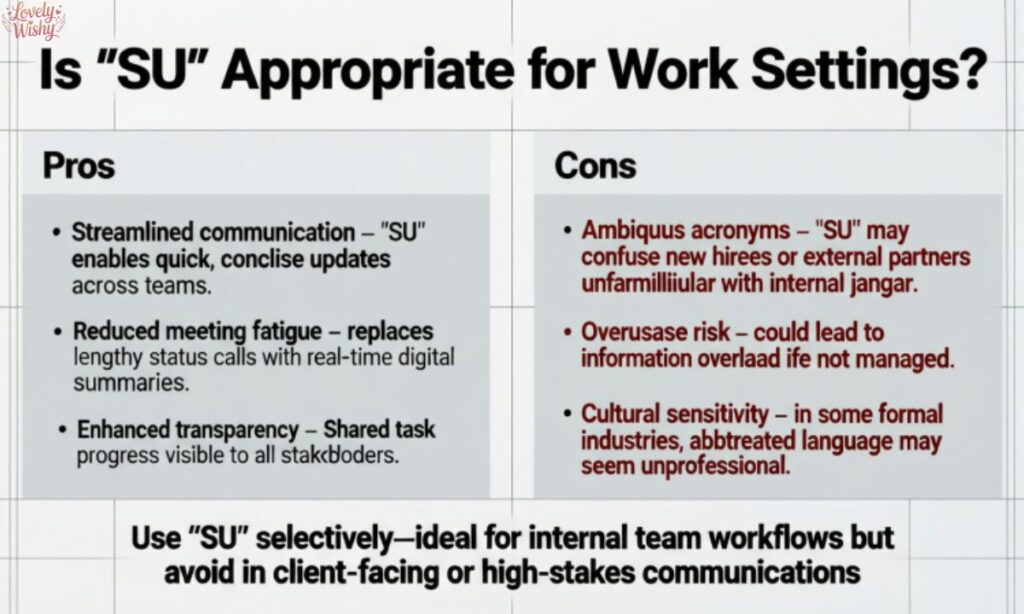
Professional environments call for different standards than casual texts:
When It’s Okay: Marketing campaigns on social media platforms where “Swipe Up” is the obvious meaning. Graphics and promotional materials where the context is crystal clear.
When to Avoid It: Company emails, LinkedIn messages, client communications, or internal memos. Ambiguity has no place in professional spaces.
Better Options: Say “Click here,” “Learn more,” “Visit this link,” or “Tap to continue.” These are direct, impossible to misinterpret, and look more polished.
Responding to “SU” the Right Way
Your answer should match what the person actually meant:
If They Wrote “SU” for Swipe Up: Go ahead and open that link, then let them know you did. A thumbs up or “got it” works perfectly.
If It’s a Playful “Shut Up”: Play along with humor. Respond with a joke or emoji back.
If They’re Saying “See You”: Confirm with your own goodbye. “Later!” or “Talk soon!” are natural replies.
Response Examples Across Different Contexts
| What They Sent | What They Meant | How to Reply |
| Just posted SU! | Swipe Up | Already did! 🔥 |
| No way, SU 😂 | Shut Up (joking) | I’m totally serious |
| Got to bounce, SU later | See You | See ya! |
Quick Comparison: “SU” vs. Similar Texting Language
| Abbreviation | Full Meaning | Vibe | When People Use It |
| SU | Multiple meanings | Variable | Social media, texts |
| SUP | What’s up? | Casual greeting | Chats, humor |
| S/O | Shout Out | Positive recognition | Social posts |
| SYU | See You | Neutral | Messaging apps |
Keeping these distinctions clear helps you sidestep awkward moments.
Commonly Asked Questions About “SU”
Does “SU” always refer to swiping? Not really. It’s common on Instagram stories historically, but between friends it usually means shut up or see you instead.
Is the term outdated now that Instagram changed things? Partially. Instagram switched to link stickers in 2021, but the habit persists, especially among creators who’ve used it for years.
Can “SU” ever come across as rude? Tone matters enormously. Friends use it playfully all the time. If the overall conversation feels unkind, then yes, it might be intended negatively.
Should I put “SU” in professional communications? Probably not. Stick with clear language in work contexts unless you’re 100% certain your audience gets it. “Click here” beats confusion every time.
How do I figure out which meaning applies in a specific message? Pay attention to the entire message and the relationship. Is there a link? Probably swipe up. Is it responding to something funny you said? Probably shut up. Is it at the end of a chat? Likely see you.
Wrapping It Up
“SU” has become more than just an abbreviation—it represents the constantly shifting nature of how we communicate digitally.
Depending on what’s happening around it, it might be directing you to tap a link, telling you to stop talking as a joke, or simply waving goodbye. Getting comfortable with these different meanings helps you text with confidence, prevents misunderstandings, and lets you match your communication style to the situation.
Whether you’re running a business or just texting friends, remember this: clarity wins. For professional use, spell things out completely. For everyday conversation, lean into context and tone, and you’ll communicate just like everyone else navigating our digital world today.
Frequently Asked Questions
What does “SU” mean in text messages
“SU” usually means “Swipe Up.” It is commonly used on Snapchat and Instagram stories to ask people to swipe for more content.
Where did the term “SU” come from
The term “SU” originated from social media features that let users swipe to open a link, page, or message.
What does “SU” mean on Snapchat
On Snapchat, “SU” means “Swipe Up” and invites viewers to interact with a link, poll, or chat option.
What does “SU” mean on Instagram stories
On Instagram stories, “SU” tells followers to swipe up to visit a website, product page, or additional content.
Can “SU” mean “Shut Up” in texting
Yes. In casual chats between friends, “SU” can sometimes mean “Shut Up,” depending on context and tone.
How do you know what “SU” means in a conversation
Check the context. If it appears in stories or posts, it likely means “Swipe Up.” In chat, it may mean “Shut Up” or “What’s up.”
Is “SU” slang or an abbreviation
“SU” is internet slang and an abbreviation used mainly in online chatting and social media platforms.
What is the difference between “SU” and “SWU”
“SU” means “Swipe Up,” while “SWU” is a longer, less common version meaning the same thing.
How do you use “SU” correctly in social media
Use “SU” in stories or captions to encourage people to swipe for links, discounts, forms, or added details.
Is “SU” appropriate to use in professional communication
Generally no. It is informal slang and should be avoided in business or formal writing.
Conclusion
SU is short and simple. It helps people talk fast online. It often means “Swipe Up” or “Shut Up,” based on context. Its meaning changes with platform and tone. Understanding the setting makes it clear. Knowing SU helps you read messages better.
SU has become common in chats and stories. It shows how language keeps changing. People like quick and easy words. Using SU correctly makes communication smoother. Pay attention to who is saying it and where. Then you can use SU with confidence.

LovelyWishy is a warm space filled with meaningful wishes, heartfelt messages, and thoughtful responses. We create simple, beautiful words that help you express emotions, celebrate moments, and connect with the people you love in a special and memorable way.