

Singapore has long been recognised as one of the most efficiently managed urban environments in the world, and its approach to waste disposal is a key part of that reputation. As a highly developed city-state with limited land and a dense population, Singapore faces constant pressure to manage waste effectively while maintaining environmental sustainability. The evolution of waste disposal services in Singapore reflects a careful balance between technological innovation, strict regulation, and public participation. This combination has allowed the country to move steadily toward its long-term vision of a zero-waste society.
The Growing Challenge of Waste in a High-Density City
Urban living naturally generates large volumes of waste, and Singapore is no exception. With its strong economy, high consumption patterns, and active industrial sectors, waste generation continues to rise each year. Despite its small geographical size, the country must accommodate residential waste, commercial refuse, construction debris, and industrial by-products within extremely limited space.
This challenge makes waste management not just a logistical issue but a national priority. Without efficient systems in place, landfill space would be exhausted rapidly, and environmental quality would decline. As a result, Singapore has developed a highly structured and centralised waste disposal system designed to minimise land use while maximising resource recovery.
Integrated Waste Management as the Foundation
At the core of Singapore’s waste strategy is an integrated system that combines multiple disposal methods rather than relying on a single approach. This includes recycling, incineration, and landfill management, each playing a specific role in reducing environmental impact.
Recycling forms the first line of defence, allowing reusable materials such as paper, metal, glass, and certain plastics to be recovered and reintroduced into the production cycle. However, not all waste can be recycled efficiently, which is where incineration becomes essential. Through waste-to-energy plants, non-recyclable waste is safely burnt at high temperatures, significantly reducing its volume while generating electricity. The remaining ash is then transported to specialised offshore landfills, helping to preserve valuable land resources.
This multi-layered system ensures that waste is not simply discarded but managed in a way that supports both environmental protection and energy recovery.
The Role of Recycling in Building a Sustainable Future
Recycling is a central pillar of Singapore’s environmental strategy. Over the years, the government has implemented multiple initiatives to encourage households and businesses to separate waste at the source. The goal is to reduce contamination and improve the efficiency of recycling processes.
Despite these efforts, recycling rates remain a key area of focus. Public education campaigns continue to emphasize the importance of proper segregation and responsible consumption habits. By encouraging individuals to think about waste before it is created, Singapore aims to reduce the overall burden on its disposal systems.
Industrial recycling has also expanded significantly. Many companies now adopt circular economy principles, where materials are reused, refurbished, or repurposed rather than discarded. This shift is gradually transforming how businesses operate, particularly in the manufacturing and retail sectors.
Waste-to-Energy Technology and Its Environmental Impact
One of Singapore’s most significant innovations in waste management is its use of waste-to-energy incineration plants. These facilities play a crucial role in reducing landfill dependency while generating usable electricity for the national grid.
By burning waste at extremely high temperatures, these plants reduce their volume by up to ninety percent. This is especially important for a land-scarce country where landfill expansion is not a sustainable long-term solution. The energy produced contributes to the nation’s electricity supply, turning waste into a valuable resource rather than a burden.
While incineration does produce emissions, modern facilities are equipped with advanced filtration systems to minimise environmental impact. Continuous improvements in technology ensure that these plants operate within strict environmental standards while maintaining efficiency.
Smart Technology Transforming Waste Disposal Services
In recent years, technology has become a major driver of improvement in waste management services. Singapore has embraced digital tools and automation to optimize collection, sorting, and processing operations.
Smart sensors are now used in waste bins across various locations to monitor fill levels in real time. This allows collection routes to be optimized, reducing unnecessary trips and lowering fuel consumption. Data analytics also plays a growing role in forecasting waste generation trends, helping authorities plan more effectively for future demand.
Automation has also improved recycling facilities, where robotic systems are used to sort materials more accurately and efficiently than manual processes alone. These technologies not only improve productivity but also reduce the physical strain on workers.
Digital platforms have further enhanced convenience for residents and businesses. Online systems allow users to report waste issues, schedule bulk pickups, and access recycling information easily. This integration of technology has made waste management more transparent and user-friendly.
Regulations and National Waste Policies
Singapore’s success in waste management is strongly supported by its strict regulatory framework. Laws governing waste disposal ensure that both individuals and businesses comply with environmental standards designed to protect public health and sustainability.
The Environmental Public Health regulations set clear guidelines for waste handling, while enforcement measures ensure compliance across all sectors. Regular inspections and audits help maintain high operational standards within waste management facilities.
The Zero Waste Masterplan represents Singapore’s long-term vision for sustainability. It focuses on reducing waste generation, increasing recycling rates, and strengthening resource recovery systems. This national strategy reflects a shift from traditional waste disposal methods toward a more circular and regenerative economy.
Corporate Responsibility and Industrial Participation
Businesses play a major role in Singapore’s waste ecosystem. Through policies such as extended producer responsibility, companies are encouraged to take accountability for the entire lifecycle of their products. This includes packaging waste and electronic waste, both of which pose significant environmental challenges.
Many organizations are now adopting greener production methods and redesigning packaging to reduce material use. Others are investing in take-back schemes and recycling programs that support national sustainability goals. These efforts are helping to shift responsibility from consumers alone to a shared model involving both producers and users.
Public Awareness and Community Engagement
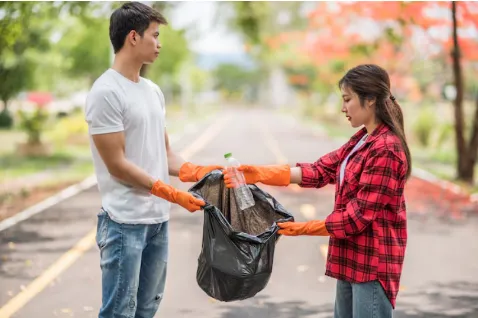
Public participation remains essential to the success of any waste management system. In Singapore, continuous education campaigns aim to build awareness about recycling habits, food waste reduction, and responsible consumption.
Schools, community centers, and media platforms all play a role in reinforcing environmental messages. By encouraging individuals to take ownership of their waste habits, Singapore fosters a culture of responsibility that supports its broader sustainability objectives.
Community initiatives such as recycling drives and upcycling workshops further engage residents in hands-on environmental action. These programs help translate awareness into practical behavior change.
Challenges in Achieving a Zero-Waste Future
Despite its advanced systems, Singapore still faces challenges in achieving its zero-waste ambitions. Waste generation continues to grow alongside population and economic activity. Certain types of waste, especially contaminated recyclables and complex plastics, remain difficult to process efficiently.
Space limitations also continue to restrict long-term landfill capacity, making continuous innovation essential. Additionally, shifting public behavior remains a gradual process that requires sustained education and engagement.
To overcome these challenges, Singapore continues to invest in research, new technologies, and policy refinement. The focus remains on reducing waste at the source rather than simply managing it after it is created.
Moving Toward a Circular and Sustainable Economy
The future of waste management in Singapore lies in building a fully circular economy, where materials are continuously reused and repurposed. This approach reduces reliance on raw resources while minimising environmental impact.
Innovations in biodegradable materials, advanced recycling technologies, and sustainable product design are expected to play a larger role in the coming years. As these developments mature, Singapore is well-positioned to further strengthen its reputation as a global leader in sustainable urban management.
Conclusion: A Model for Global Waste Management
Singapore’s waste disposal system demonstrates how careful planning, technological innovation, and public cooperation can transform a major urban challenge into a sustainable success story. Through its integrated approach, the country has managed to significantly reduce landfill dependency while maximising resource recovery.
While challenges remain, Singapore continues to evolve its systems with a clear focus on sustainability and efficiency. Its commitment to innovation and environmental responsibility offers a strong example for others.

LovelyWishy is a warm space filled with meaningful wishes, heartfelt messages, and thoughtful responses. We create simple, beautiful words that help you express emotions, celebrate moments, and connect with the people you love in a special and memorable way.